Captain Cronjager
The Big SleepCaptain Cronjager is a Hollywood homicide officer whose confrontation with Philip Marlowe makes the novel’s compromised police process explicit. He questions Marlowe’s decisions in the Geiger and Brody cases, but ultimately acknowledges that public exposure of Geiger’s illicit business would damage the division and leaves with a negotiated disposition rather than a full public account.
Identity and Introduction
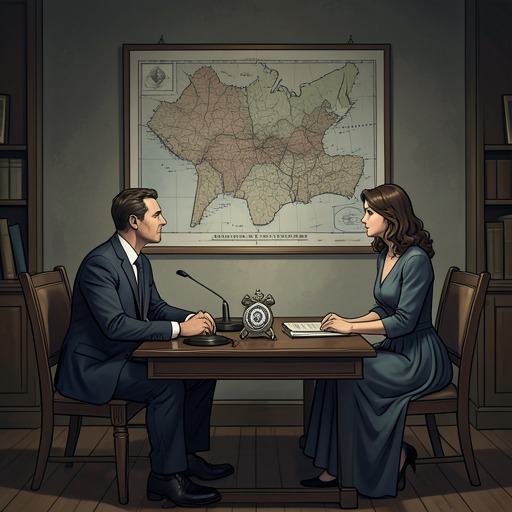
At a meeting in Taggart Wilde’s study, Bernie Ohls introduces Cronjager to Marlowe as a private detective “who’s in a jam.” Cronjager, lean and hard-faced, looks Marlowe over before Wilde says he will try to handle the captain. The meeting’s civil setting does not soften the conflict: Cronjager is there as a homicide investigator, while Marlowe has withheld information and has become entangled in the events he is explaining.
Investigation and Dispute
Asked by Ohls about the killing at Randall Place, Cronjager gives a provisional account: Joe Brody has been shot, and a blonde woman found trying to start a car that was not hers has been brought in and questioned. She admits she was present but says she did not see the killer. Cronjager stresses that the killing happened only about an hour earlier, resisting the expectation that the police already possess a complete reconstruction.
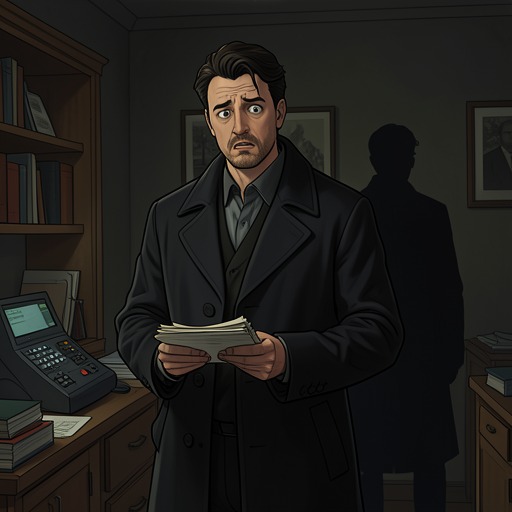
Marlowe then recounts the case, deliberately leaving out Carmen Sternwood’s visit to Brody’s apartment and Eddie Mars’s visit to Geiger’s house. Cronjager listens without interrupting and accuses Marlowe of failing to report Geiger’s death, then spending the next day in ways that helped Geiger’s associate reach Brody and commit another murder. Marlowe admits that he wanted to protect his client and had not expected the young man to attack Brody. Cronjager’s objection is causal as well as professional: had Geiger’s death been reported, the illicit books might not have been moved, and the later chain of events might have been interrupted. He insists that Brody’s criminality does not make his life disposable.
The disagreement also concerns what can be inferred from the evidence. Marlowe argues that Owen Taylor had the motive, jealousy, and opportunity to kill Geiger, while Brody was trying to take over Geiger’s racket and was not, in Marlowe’s judgment, a killer. He rejects the alternative theory that Brody killed Geiger, took the photograph of Carmen, framed Taylor, and caused Taylor’s death at Lido Pier as requiring too many coincidences. Cronjager’s earlier report supplies the immediate police facts; Marlowe’s explanation supplies a competing reconstruction of how those facts fit together.
Institutional Compromise
When Marlowe offers to testify that Geiger’s store was a front for illicit literature and says the police had allowed it to operate, Cronjager stands, puts on his hat, and says he is outnumbered. He distinguishes the homicide investigation from the division’s institutional interests: Geiger’s business is not his concern as a homicide officer, he says, but having it exposed in the newspapers would not help his division. He asks what the others want. Ohls replies that he wants to turn a prisoner over to him, and Cronjager leaves with him.
The subsequent newspapers show the result of the case’s public handling. They credit Cronjager with solving both killings but describe a false sequence and attribute the deaths to a dispute over the proceeds of a wire-service operation. The reports say Brody killed Geiger and Carol Lundgren killed Brody in revenge; they also present Taylor’s death as a suicide and omit the Sternwood family, Ohls, and Marlowe. Cronjager is therefore attached to an official account that simplifies and distorts the facts established in the investigation. The text does not show him composing that account, but his concern about press exposure and the division’s reputation makes his role in the meeting part of the machinery that permits such a public narrative.
Character and Narrative Significance
Cronjager is neither simply a neutral fact-finder nor a caricature of corruption. He presses Marlowe on the consequences of withholding a murder report and insists that Brody’s life matters, even though Brody was a criminal. At the same time, his willingness to treat the scandal as a threat to the division reveals how institutional protection shapes the practical limits of police truth-telling. His confrontation places Marlowe’s private code under scrutiny while showing that the official account, too, is assembled under pressure from interests beyond the bare facts.